Toggle Nav


Erysipelas in swine is caused by the bacteria Erysipelothrix rhusiopathiae and is found in most if not all pig farms worldwide. It is reported that up to 50% of animals may carry the bacteria in their tonsils which is why the disease continues to affect pigs worldwide, with economic losses stemming from disease outbreaks or animals being condemned at slaughter.
The bacteria is always present in either the pig or in the environment because it is excreted via saliva, feces or urine making it nearly impossible to eliminate exposure to the herd. Infected feces is likely the main source of infection, particularly in growing and finishing pens.
While the bacterium itself can cause Erysipelas, virus infections such as Porcine Reproductive and Respiratory Syndrome (PRRS) or swine influenza, may trigger Erysipelas outbreaks as well.
Erysipelas is uncommon in pigs under 8-12 weeks of age due to protection provided by maternal antibodies from the sow via the colostrum. The most susceptible however are growing pigs, non vaccinated gilts and up to 4th parity sows.
Once the bacterium enters the body, the organism multiplies in the body invading the bloodstream resulting in septicemia. This multiplication blocks tiny blood vessels to the skin over the back and sides causing thrombosis. The result of this restricted blood supply, are visible small raised areas on the skin and abdomen that appear diamond shaped.
The rapidity of multiplication and the level of immunity in the pig determines the clinical symptoms expressed as acute, subacute or chronic disease presentations.
The signs and symptoms of Acute Erysipelas are:
Toe Walking
Fever/Anorexia/Thirst
Skins Lesions/ Ear Discoloration
Diamond shaped lesions on snout and abdomen
Sudden Death
The signs and symptoms of Subacute Erysipelas are:
Skin Lesions
Lack of Appetite
Mild Fever
The signs and symptoms of Chronic Erysipelas are:
Arthirits
Heart Valve Infection
Sudden Death
Exposing pigs to other pigs or boots, clothing, or equipment that have been around other pigs greatly increases the risk for disease transmission.
Visible bodily secretions (blood, urine, feces, or mucus) from infected pigs is another major transmission factor.
The erysipelas organism is very sensitive to penicillin. Acutely ill animals should be treated with quick acting penicillin twice daily for three days. Alternatively a long-acting penicillin, given as a single dose to cover 48 hours of treatment, could be given and then repeated.
Vaccination programs have proven effective at controlling but need to be modified to each swine operation and should be developed in consultation with your veterinarian. The following are the current recommend vaccines to utilize...

May be administered orally to individual pigs or through the drinking water.
Administered at 8 weeks or older.
Only freeze-dried vaccine approved for one dose administration on the market.
Can NOT be mixed and administered with other brands of products.
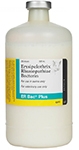
Used to vaccinate healthy swine 3 weeks of age or older.
Two 2 mL doses administered 3-4 weeks apart.
Semiannual re-vaccination with single dose is recommended.

Vaccine used in healthy breeding swine that aids in preventing erysipelas caused by E. rhusiopathiae and leptospirosis caused by L. canicola, L. grippotyphosa, L. hardjo, L. icterohaemorrhagiae and L. pomona.
8-week duration of immunity following vaccination has been demonstrated against erysipelas.
Healthy swine should receive 2 doses 3-5 weeks apart with the second dose administered 2-4 weeks prior to breeding.
Healthy gilts should receive the second dose as near as possible to 14 days prior to breeding.

Vaccination of healthy swine (including pregnant sows and gilts) 3 weeks of age or older as an aid in preventing swine erysipelas for a period of 20 weeks and Mycoplasmal Pneumonia respiratory disease caused by Mycoplasma hyopneumoniae.
No mixing, combining or risk of contamination from the process.
The only PCV2 and Mycoplasma hyo vaccine approved for use in pigs as early as 3 days of age.
Aids in the prevention of PCV2 viremia, which is the initial step in the development of PCV2 disease.
Two adjuvants, including Amphigen, which enhances the immune response using the animal’s natural defense system to fight disease.
Proven 18-week post-vaccination duration of immunity against erysipelas.
Help protect against some of the leading causes of reproductive failure in swine.
Revaccination with a single dose is recommended prior to subsequent breedings.
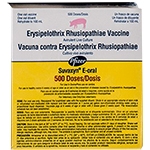
Avirulent live culture of E. rhusiopathiae.
Administered to pigs 6 weeks of age or older through the water.
Mix with skim milk or non-medicated milk replacer.
Can be used with proportioner.

3 weeks of age or older as an aid in preventing respiratory disease caused by SIV subtypes H1N1 and H3N2, erysipelas caused by E. rhusiopathiae.
Duration of immunity of at least 10 weeks and up to 20 weeks.
Can be used to vaccinate sows/gilts.
Protection against SIV virus.
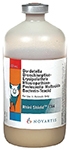
Four-way protection in one convenient dose.
Administer a 5-mL dose to sows and gilts five and two weeks prior to farrowing.
Aid in the prevention of atrophic rhinitis caused by B. bronchiseptica or the toxin of P. multocida, erysipelas caused by E. rhusiopathiae, and pneumonia caused by P. multocida.
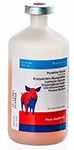
Aid in the prevention of disease caused by porcine parvovirus, E. rhusiopathiae, and Leptospira pomona.
Combination of killed virus and bacteria for better protection.
Safe for use in pregnant animals.
It's important to contact your veterinarian to determine the best vaccination program for your site.
If you have any questions, please contact Pipestone Veterinarian Services by calling 507-562-PIGS(7447).