Toggle Nav


Porcine Reproductive and Respiratory Syndrome abbreviated as PRRS is caused by a virus which was first isolated and classified as an arterivirus as recently as 1991. PRRS had been first recognized in the USA in the mid 1980's and was called "Mystery Swine Disease" or "Swine blue ear disease".
PRRS is the most economically significant disease to affect the U.S. swine production since the eradication of classical swine fever.
The PRRS virus has a particular affinity for the aveolar macrophages found in the lung. Macrophages are part of the normal immunity system, the function of which are to ingest and remove invading bacteria and viruses. In contrast to most other bacteria and viruses, macrophages do not destroy the PRRS virus but instead, the virus multiplies inside them producing more virus eventually killing up to 40% of the macrophage cells which allows bacteria and other viruses to proliferate and do damage.
Once it has entered a herd, the PRRS virus tends to remain present and active in the herd indefinitely which is why it's important to have a wean to market PRRS control strategy in place.
The virus is spread by nasal secretions, saliva, feces and urine primarily and field studies suggest it can be airborne for up to 2 miles.
Exposing pigs to other pigs or boots, clothing, or equipment that have been around other pigs greatly increases the risk for disease transmission. Aerosol and pig to pig contact are the primary modes of transmission.
In adult pigs...
Reduced appetite
Fever
Premature farrowing and abortion
Loss of balance, circling and falling
Death in up to 10% or more of sows
In affected litters...
Stillborn pigs
High pre-weaning mortality
Mummified pigs
Variably sized weak-born pigs
Edema around the eyes
In weaned pigs...
Loss of appetite & lethargy
Obvious failure to thrive
Labored or rapid breathing and/or respiratory distress
Blotchy reddening of the skin
Rough hair coats
Vaccination programs need to be modified to each swine operation and should be developed in consultation with your veterinarian. The following are highly recommended because of their effectiveness...
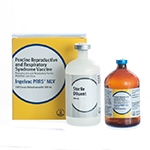
Trusted and field proven.
Cost effective.
Unique in its ability to be used in pigs (3 weeks or older), gilts, and sows at ANY stage of production.
Available in three convenient sizes (10, 50, and 250 dose)
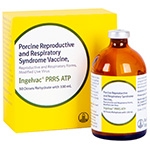
Developed from a different parent strain in comparison to Ingelvac PRRS® MLV.
Known for demonstrating cross protection.
Effective in reducing reproductive failure and respiratory disease due to PRRS virus.
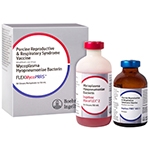
Customized control of two diseases with one injection Porcine Reproductive & Respiratory Syndrome Virus (PRRSv) and Mycoplasma hyo.
Safe, consistent and long-lasting.
The vaccine can be administered in pigs 3 weeks of age or older.
Available in two sizes (50 and 250 dose).
It's important to contact your veterinarian to determine the best PRRS vaccination program to protect your pigs for your site.
If you have any questions, please contact Pipestone Veterinarian Services by calling 507-562-PIGS(7447).