Toggle Nav


Coccidiosis is caused by small parasites called coccidia that live and multiply inside the host cells, mainly in the intestinal tract. There are three types, Eimeria, Isospora and Cryptosporidia. The disease is common and widespread in sucking piglets and occasionally in pigs up to 15 weeks of age.
The signs and symptoms of Coccidiosis in swine can occur as early as five days after birth but are more commonly seen in piglets from one to three weeks old. Signs include yellow to clear, pasty to watery diarrhea, dehydration, rough hair coat and failure to gain weight. The clinical disease within a litter can appear in two waves; the first wave (four to six days) representing infection and subsequent contamination of the farrowing crate environment by a few affected pigs, the second wave appearing four to eight days later after the rest of the litter becomes infected. Piglets usually continue to nurse but may vomit milk. Morbidity is high but mortality is variable, often moderate. Producers often report neonatal diarrhea that resembles colibacillosis but that fails to respond to antibiotic therapy. Fecal blood is not a feature of porcine coccidiosis.
Coccidia are initially introduced into farrowing facilities by carrier sows. Oocysts produced by dams or more likely, their parasitized piglets, survive in farrowing rooms and crates and become a major source of infection for subsequent litters. Once infected, piglets magnify the numbers of oocysts and heavily contaminate the environment. As a result of this buildup of oocysts, piglets are able to ingest high numbers of oocysts, a requisite for producing clinical disease. Inadequate sanitary practices between farrowing groups undoubtedly facilitate this buildup.
In a warm, moist environment, oocysts in feces-contaminated farrowing rooms and crates soon become infective. They are ingested when piglets first nurse or when they ingest feed, water or feces in the farrowing crate. The sporozoites within oocysts mature and are released to penetrate enterocytes. Many enterocytes are destroyed by the developing coccidia. Released oocysts are passed in the feces.
A vigorous, effective sanitation program, along with careful cleaning and disinfection of farrowing crates between farrowings is essential. Strong bleach or ammonium compounds can be used for disinfection after thorough cleaning of the crates. Between farrowings, steam cleaning of the entire farrowing facility may be necessary. Sealing all surfaces with paint or a water seal may be preferable to break the cycle of infection. Wooden and concrete surfaces are particularly difficult to clean effectively on affected farms. Installation of perforated metal or plastic flooring in the crates will be beneficial in the control of coccidiosis and other neonatal enteric diseases.
On farms known to be affected by coccidiosis, routine treatment of all piglets with toltrazuril early-on will minimize the incidence and severity of coccidiosis. There is no proven, widely accepted anticoccidial or drug for use in dams that is effective at controlling the disease in neonates.
Most cases of coccidiosis associated with Eimeria spp. are the result of the introduction of naïve pigs into a heavily contaminated environment. Control is based on minimizing the dose of oocysts ingested. Scrupulous sanitation between groups of pigs is usually sufficient to prevent disease.
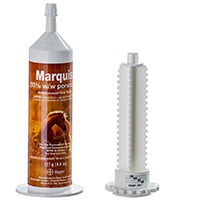
Marquis Paste (Antiprotozoal Oral Paste) was originally developed to treat EPM in horses but used effectively treat scours in piglets due to coccidia, a parasite that produces scours at 7-8 days of age or older.
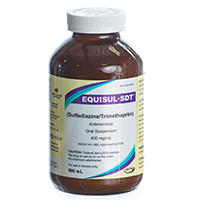
Equisul-SDT® was originally formulated and developed for the treatment of lower respiratory tract infections in horses caused by susceptible strains of Streptococcus equisubsp.
Because of its broad spectrum nature, recently veterinarian professionals have found this product to be effective in newly weaned piglets experiencing diarrhea that has proven resistant to normally used medications with significantly higher bio-availability on a mg-to-mg basis.
It's important to contact your veterinarian to determine the best treatment program options when Coccidiosis affects your site.
If you have any questions, please contact Pipestone Veterinarian Services by calling 507-562-PIGS(7447).